The Importance of Solid Fuel System Design
The goal of a system design is to ensure that wood stoves and fireplaces are safe and perform well. Good system design eliminates most situations that cause poor performance. Poor performance can include: downdrafts when the appliance is not in use; smoke spillage when the appliance is operating; appliances that do not sustain combustion or overfire; and cold chimneys, which can cause rapid accumulation of combustible deposits. The overall goal is to have an appropriate chimney with good draft. A warm chimney will keep the flue gases warm enough that the smoke exits the chimney without condensing.
Solid Fuel System Design Considerations
Many things need to be taken into account when designing a system. The warm air rising through the chimney is the engine that drives the fire in stoves or fireplaces. The chimney’s size, height, warmth, and its height relative to the interior of the house determine the chimney’s updraft. Systems are designed to be compliant with the manufacturer’s instructions and CSA B365:25 | Codes & Standards
Building and Ceiling Type
Important factors influencing this are the type of building, the building envelope and the appliance’s location within it. The type of building (bungalow, bi-level, multi-story) or type of ceiling (flat, cathedral) will also influence the stove’s burning characteristics by determining the required chimney height.
Chimney Height
Wood stoves and fireplaces may specify the minimum chimney length for proper operation. Additionally, the code requirement for chimney height is 3 feet above the roof where it penetrates, and 2 feet taller than any structure within 10 feet of the chimney.
There are certain instances where this may not provide an adequate draft ( for example: a chimney above a single-story addition on a house with a two-story or cathedral ceiling, or a chimney in a room with a cathedral ceiling where the cathedral ceiling is higher than the top of the chimney)
Building Envelope and Mechanical Systems
The airtightness of the building envelope, as well as any mechanical systems such as exhaust fans and heating appliances, will affect the air pressure differences within a house. Since wood stoves and fireplaces rely on natural drafting, mechanical systems may create enough negative pressure within a house to cause poor performance. Since chimney draft is related to the temperature of the flue gases, cold flues will have a weaker draft than warm ones.
Chimney Location and Temperature
If the chimney is cold or poorly insulated, the flue gases may cool enough to condense inside the chimney, leading to soot and creosote buildup and magnifying downdrafts. Exterior chimneys exposed to the elements are especially prone to this. The correct chimney will minimize this.
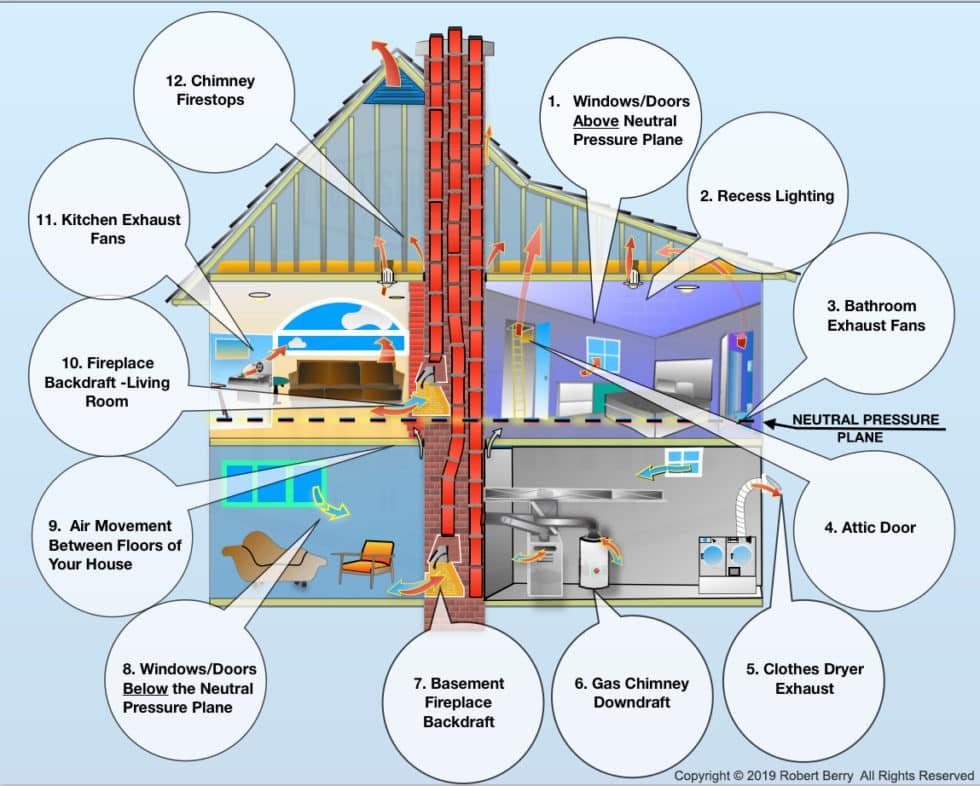
The following picture illustrates all of the potential reasons that may cause issues with naturally drafted appliances.
Stove and Fireplace Selection and Location
As you can see, many factors may contribute to a wood-burning stove or fireplace performing poorly. A wood-burning appliance located below the neutral pressure plane is prone to backdrafting and standing downdrafts. Exterior chimneys outside the heated building envelope are also prone to performance issues such as creosote buildup and weak draft.
Whether you are considering a new installation or trying to resolve existing performance issues, a WETT Certified professional can diagnose the most likely causes and objectively evaluate the variables to recommend a problem-free installation.
Book a System Design and Evaluation
Let us diagnose your system issues and design one that works for you!