
Mantles
Mantles and Hearths are some of the most cherished features of wood-burning fireplaces. As the fireplace is often the focal point in any room, a mantle serves the important function of displaying personal momentos, not to mention Christmas decorations and stockings! As they are exposed to the heat rising from the fireplace opening, consideration should be given to the materials they are made from and their height above the fireplace. Depending on the type of appliance, the safe height will vary. The required location will depend on the type of fireplace that is present.
Non-traditional mantles can be constructed from any other durable material capable of supporting the weight of the intended contents. If constructed of combustible materials, clearances above the opening must be observed. If constructed from non-combustible materials, a greater range of installation heights and depths is possible. Options include stone, cement, glass, and metal, or combinations thereof. The weight of the mantle may require mantle legs or brackets. Mantle legs go all the way down to the floor, while mantle brackets do not.
Having a WETT Technician advise you on the correct height above the opening will ensure it is safe. Installing non-combustible materials or using shielding can also help create safe clearances above the fireplace.
If you would like to schedule an evaluation of your existing mantle or need help finishing and installing your new one, reach out to us.
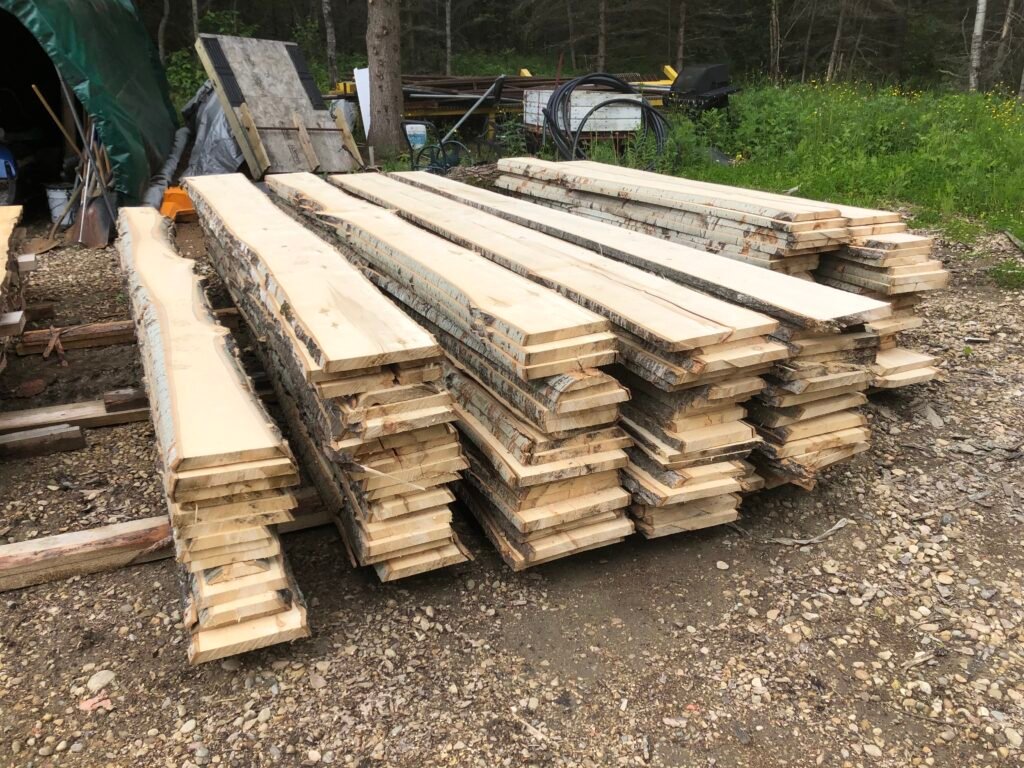
For a great selection of Live-edge lumber and mantle material contact The Firewood Farm.
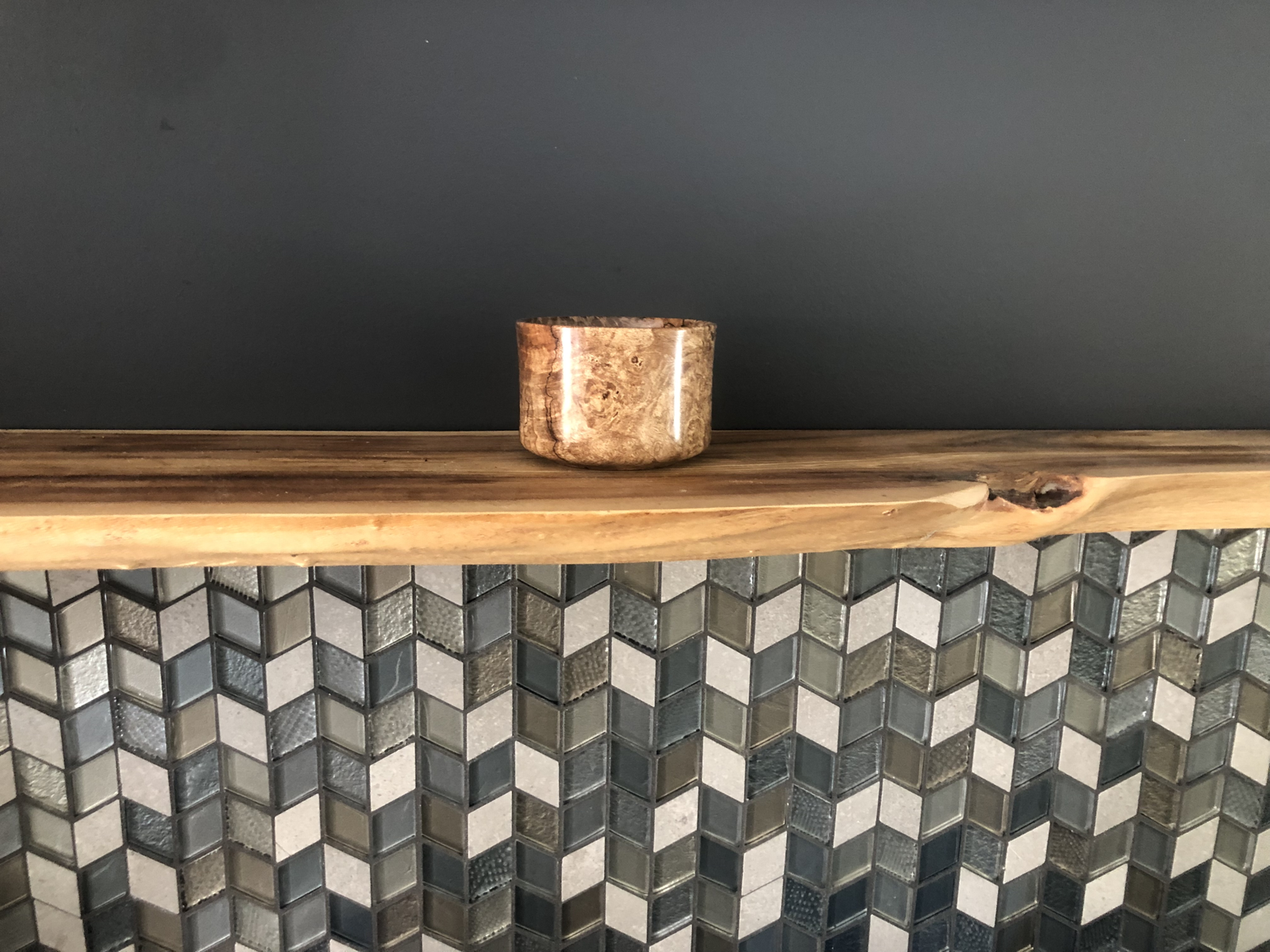
Finished live-edge Bird Cherry (Mayday) Mantle
Hearths
A hearth is another way to add a distinctive feature to your house. Most often Hearths are used as ember protection. Constructing hearths from non-combustible materials will protect the floor around your wood-burning appliance from damage and fire. Approved materials for ember protection include stone, tile, concrete, brick, metal or even glass!
However, some stoves and fireplaces also require the hearth to have insulating properties that protect the floor from heat radiating from the front or bottom of the appliance. Our WETT Certified Technicians can advise you on the type of Hearth you require. As well, the dimensions of the hearth may vary by manufacturer. They will ensure the hearth is up to code!
Wood-burning inserts installed into existing masonry fireplaces will usually require hearth extensions. The most common scenario we see is a 16″ deep, raised hearth in front of masonry fireplaces. In this case, the front of the insert projects out and the hearth is no longer far enough from the front of the unit. The minimum hearth extension in front of wood inserts is typically 18″. Installing a wood insert almost always requires extending the hearth. Extending the hearth beyond 18″ provides increased ember protection.
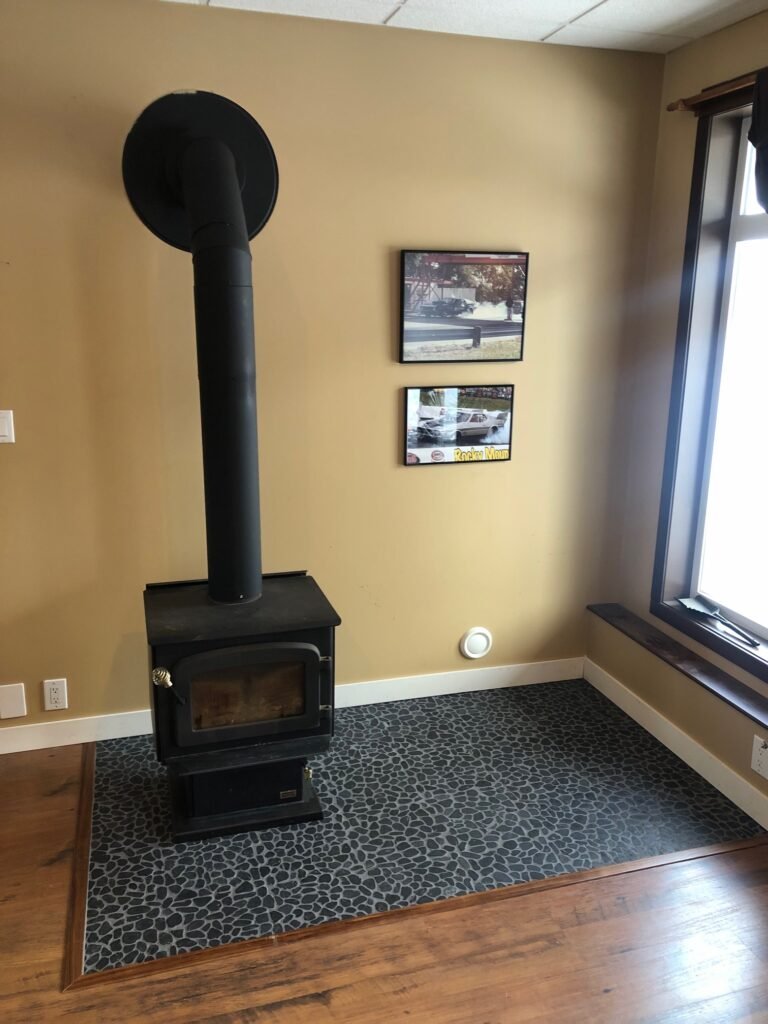
Mosaic Cobblestone Hearth Pad on Concrete Floor.